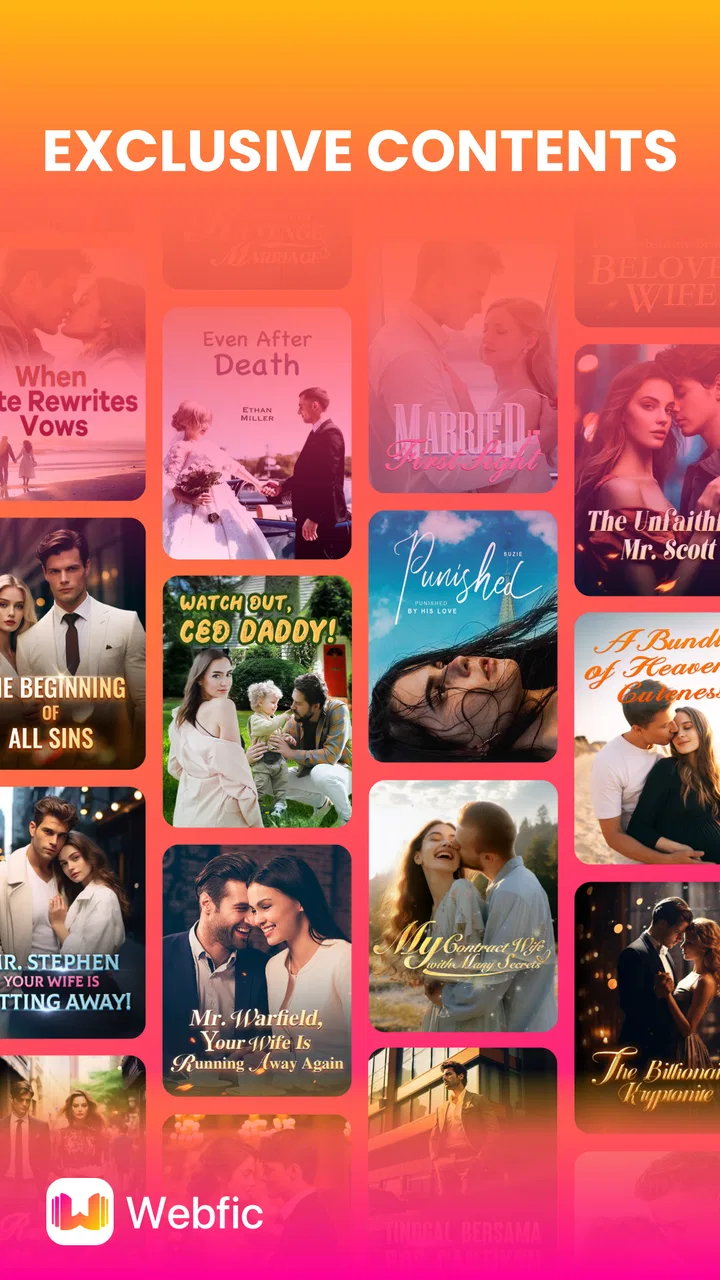
Webfic - Fantastic Reading
- 4.1
- Rating
- 5.00M
- Installs
- Free
- Price

 Analysis by App-foxy
I approached Webfic - Fantastic Reading as a reading app first, rather than as a simple place to open a digital book. That distinction matters because its appeal comes from the way it presents ongoing books and novels in a mobile-friendly format. If you enjoy checking in for a short reading session, following several stories at once, and keeping your entertainment on your phone, it offers a more immediate experience than a traditional ebook library.
At the same time, I would not recommend it automatically to every reader. The service is built around discovering and continuing serialized fiction, so it feels different from buying a finished ebook, borrowing from a library, or reading a long-form novel in a conventional reader. I found it most enjoyable when I treated it as a regular habit: browse when I have a few minutes, choose one story deliberately, and stop before the app turns reading into aimless scrolling.
How the everyday reading workflow feels
The basic routine is straightforward. I open the app, look through the available fiction, choose a title that matches my mood, and read in short portions. This works particularly well during a commute, while waiting for an appointment, or at the end of the day when I want a story without setting aside a full evening. The phone-first presentation makes the experience feel less formal than sitting down with a printed book, which can be a strength when consistency matters more than ceremony.
You May Also Like

 Blood Strike: 2.5 Anniversary
Blood Strike’s Loadouts Turn Every Drop Into a Tactical Gamble
A close look at Blood Strike’s custom loadouts: how fast access to signature weapons reshapes its battle royale rhythm, rewards preparation, and narrows the gap between fights.

 Pandora - Music & Podcasts
Pandora’s Music Is Easy to Start, but Harder to Recover
Pandora’s strength is its low-effort path from a seed to a station. Its weak spot is how much confidence it asks you to place in connection, setup, and quiet recovery.

 8 Ball Pool
 Is Built on Rivalries, Rematches, and Routine
A close look at the rivalries, rematches, shared routines, and unanswered safety questions that turn a quick pool match into a persistent mobile community.

 Samsung Music
’s Quiet Strength Is Playing What You Already Own
Its reach comes less from spectacle than from dependable access to a personal library. That simplicity is both the app’s strongest retention engine and its ceiling.

 AccuWeather: Weather Radar
AccuWeather Review: A Quick, Clear Forecast for Everyday Decisions
For everyday plans, the best forecast is the one you can understand quickly. AccuWeather makes rain timing, radar, and local conditions easy to act on, with a few trade-offs.

 Hill Climb Racing
Why Hill Climb Racing Still Turns Crashes Into One More Run
A tiny car, a bumpy hill and one more upgrade: Hill Climb Racing keeps resurfacing because its simple chaos makes every near-miss feel personal.
More From Our News Desk



Webfic belongs to the Books & Reference category, but I think of it more specifically as a mobile fiction platform. It is not trying to replace every kind of reading. Someone looking for reference manuals, academic material, scanned classics, or a carefully organized personal EPUB collection will probably feel more at home elsewhere. Here, the central task is discovering stories and returning to them easily.
One practical habit helped me avoid losing time in the catalog: I separated browsing from reading. When I had only a few minutes, I continued a story already chosen instead of repeatedly sampling new titles. When I had more time, I explored the selection and made a short mental list of possibilities. That small distinction made the app feel much less distracting and gave each session a clear purpose.
The app is free to install and use, which lowers the barrier to trying it. However, in-app purchases range from a small amount to several hundred dollars per item, so I would not treat the free starting point as a guarantee that every part of every reading journey will remain free. The sensible approach is to decide in advance whether you are comfortable spending money to continue particular stories, rather than making that decision at an emotional cliffhanger.
That is especially important for readers who become attached quickly. Serialized fiction often encourages momentum: a dramatic ending makes the next portion feel urgent, even when waiting or switching to another title would be perfectly reasonable. I recommend checking the purchase prompt calmly, considering whether you genuinely want to continue, and keeping a personal spending boundary. This is not a criticism of the reading format itself; it is simply the trade-off that comes with stories designed to be consumed in installments.
Who gets the most from it
I see the strongest fit for readers who like romance, drama, fantasy, and other story-driven fiction delivered in frequent, manageable portions. It also suits people who rarely finish a long book because they read in fragments. A few minutes with a continuing novel can be easier to maintain than carrying a large ebook through a busy week.
It is less suitable for someone who wants a one-time purchase and complete ownership of a finished text. It may also frustrate readers who prefer a quiet, distraction-free interface, a broad selection of established publishers, or full control over file formats and personal libraries. If your ideal reading setup involves importing books, adjusting every aspect of typography, and organizing shelves manually, a dedicated ebook reader will probably be a better match.
The Teen content rating is another useful signal for families. I would still make the choice based on the individual stories rather than assuming that one age label describes every theme or emotional situation equally well. A teenager can enjoy the format, but parents who want close control over reading material should review titles together instead of relying only on the general rating.
Settings and habits that make a difference
My first recommendation is to spend a moment looking through the available reading options before starting a long session. On a phone, small interface choices can affect comfort more than expected. Check how the page advances, how text is displayed, and whether the current arrangement feels easy to follow in the lighting where you normally read. A setting that feels fine for five minutes may become tiring after an hour.
I also prefer to make the screen fit the story rather than forcing one permanent arrangement. A brighter presentation can be useful during the day, while a calmer appearance may be easier at night. The important point is not to chase a perfect setup; it is to remove friction so that the reading itself stays in focus. If a page feels crowded or the rhythm of advancing feels awkward, adjust it early instead of tolerating the problem through an entire chapter.
Because the app is designed for mobile reading, I would also pay attention to how it behaves in your normal network conditions. If you know you will be traveling or spending time with unreliable connectivity, open the stories you intend to read while you still have a dependable connection and check what remains accessible. I am deliberately cautious here: I would not assume that every part of the catalog works offline in the same way as a downloaded ebook. For travel, a conventional reader with locally stored books remains the safer choice.
Another worthwhile check is your account and purchase awareness. Before becoming invested in several stories, understand how the app presents continuation options and what action is required when a paid item appears. Keeping your reading choices and spending choices separate is a surprisingly effective habit. I found that deciding on a title because I wanted the story was better than deciding because I had already spent time browsing it.
The current version is 2.5.6.1141, and the app supports Android starting with version 6.0. That makes it accessible on many older devices, which is useful if you keep a secondary phone for reading. Still, compatibility does not automatically mean identical comfort across devices. A smaller screen, older hardware, or a battery that is already weak can make long sessions less pleasant, so I would test the actual reading experience on the phone you plan to use rather than judging it only by operating-system support.
For iPhone users, the same general principle applies: the best experience depends on the screen, lighting, and your own reading rhythm. I would not choose between this app and another reader solely on platform availability. The more important question is whether you like its story discovery and installment-based approach enough to return regularly.
A repeatable routine for busy days
My preferred routine has three steps. First, I choose one primary story instead of opening every interesting cover. Second, I read until a natural stopping point, even if the app encourages me to continue immediately. Third, I leave myself a simple reminder of what I was reading if I know I will return later. This prevents the common problem of spending the entire available break browsing rather than reading.
For a realistic example, imagine a weekday lunch break with ten minutes available. I would open Webfic, continue a title already selected, and avoid exploring the entire catalog. If a paid continuation appears, I would postpone the decision until I can consider it properly. In the evening, with more time, I could compare other stories and decide whether the original title still deserves my attention. That workflow keeps the app enjoyable without allowing a short break to become an unplanned spending session.
Another useful pattern is to keep different moods in mind rather than collecting too many unfinished stories. A lighter title can work during a busy day, while a more involved fantasy or drama may be better when I can concentrate. The benefit is not a special feature; it is a way of using the catalog deliberately. Too many simultaneous stories create decision fatigue and make the app feel noisier than it needs to be.
Faster discovery without endless browsing
Experienced use is less about reading faster and more about choosing better. I learned to judge a title by whether its premise genuinely appeals to me, not merely by whether its presentation looks dramatic. If the opening portion does not establish a reason to care, I move on instead of hoping that repeated sampling will somehow improve the experience.
I also recommend giving a new story a defined trial window. Read enough to understand its tone, pacing, and characters, then make a decision. This is more efficient than abandoning and reopening the same title several times. It also helps when the catalog contains many tempting options, because every new choice has an opportunity cost: time spent sampling is time not spent finishing something you already enjoy.
When returning to an ongoing story, I found it useful to pause briefly and recall the last meaningful event before continuing. That tiny reset reduces confusion, especially when I have been reading several titles. It is a better habit than immediately jumping into the next portion and then rereading because the characters or conflict no longer feel familiar.
Short sessions can also be used strategically. I prefer them for discovering whether a title suits me, while longer sessions are reserved for stories that have already earned my attention. This avoids judging every book by the same standard. A story with a slow opening may need patience, but patience should be a conscious choice, not an automatic consequence of having already invested time.
Compared with a typical ebook store, Webfic feels more focused on ongoing discovery and mobile continuity than on building a permanent shelf of completed books. Compared with a library app, it may feel less like borrowing a known title and more like exploring what is available to read next. Compared with a web browser, the dedicated app gives the activity a clearer home, but it also keeps the reading experience tied to its own catalog and purchase flow.
That comparison explains the main trade-off. If you want convenience, frequent story discovery, and a format that suits small gaps in the day, this service has a clear advantage. If you want ownership, portability, archival control, or a predictable price for a complete novel, the usual ebook alternatives are stronger. I would not use Webfic as my only reading platform; I would use it alongside a conventional book library if I enjoyed serialized fiction.
Small decisions that protect the experience
I would avoid starting a new title immediately before sleep if cliffhangers tend to keep you awake. The format is good at creating momentum, and a supposedly short session can easily become longer. Setting a stopping point before opening the app is more reliable than trusting yourself to stop after the next dramatic moment.
I would also be careful with shared devices. Since reading progress and account activity can matter, a personal phone provides a more predictable experience than switching between several people’s devices. This is ordinary account hygiene, but it becomes more important when free reading and optional purchases exist in the same environment.
Finally, I would keep the app updated through the normal store process and revisit the interface after updates. Reading applications can change small navigation details over time. If a familiar control moves, taking a minute to recheck the reading screen is preferable to assuming that the old workflow still applies. I would not build a routine around undocumented shortcuts or claim that every device exposes identical controls; the reliable method is to use the options actually visible in your installation.
Where the format reaches its limits
The biggest limitation is not technical; it is structural. Serialized reading can make a story feel accessible, but it can also make the total journey harder to judge at the beginning. A reader may enjoy the premise and early chapters without knowing how satisfying the longer arc will be. That uncertainty is acceptable if you enjoy discovery, but frustrating if you want to choose a complete novel with a clear beginning and ending.
The purchase range deserves serious attention as well. A free app can still become expensive when a reader follows multiple stories and treats every continuation as necessary. I would recommend trying one or two titles first, learning how the reading and payment flow feels, and only then deciding whether the service belongs in your regular entertainment budget. Readers who dislike variable costs should probably choose a subscription or library model with clearer limits.
Another limitation is that a phone is not always the ideal reading device. Long sessions can be less comfortable than reading on an e-ink reader, and people sensitive to notifications may find a phone inherently distracting. Webfic can fit into a mobile routine, but it cannot remove the other demands of the device. For deep, uninterrupted reading, a dedicated reader or printed book may still win.
The catalog approach can also produce choice overload. Having many novels available is useful only when discovery remains manageable. My solution was to limit active titles and treat the rest as possibilities rather than obligations. If you regularly feel guilty about unfinished books, this app may amplify that feeling unless you are willing to abandon stories freely.
There is also a difference between reading for relaxation and reading for study. I would not choose this app as my main tool for research, annotation-heavy work, or building a carefully searchable reference collection. Its strongest value is narrative entertainment in a convenient mobile format. Trying to force it into an academic workflow would obscure what it does well.
My verdict after building a steady routine
Webfic - Fantastic Reading is a convincing option for readers who want fiction that fits around daily interruptions. I liked it most when I used it intentionally: one or two active stories, a comfortable reading setup, a clear stopping point, and a firm distinction between browsing and spending. Those habits turn a potentially noisy catalog into a practical source of short, repeatable reading sessions.
The app has also reached a sizeable audience, with over five million installs, an average rating of 4.1 from around 190 thousand ratings, and roughly 4.5 thousand written reviews. Those figures suggest that the format has broad appeal, although they should not replace your own judgment about serialized fiction and optional purchases. The developer is DIANZHONG TECHNOLOGY SINGAPORE PTE. LTD., and the app has been available since August 11, 2020.
I would recommend trying it if you enjoy discovering mobile novels, reading in small portions, and returning to continuing stories throughout the week. I would skip it if your priority is complete ebooks at predictable prices, offline ownership, highly advanced typography, or a quiet device dedicated only to reading. In those cases, a standard ebook store, library service, or e-ink reader is likely to serve you better.
For me, the deciding question is simple: do you want a finished book in your hand, or do you enjoy the ongoing rhythm of finding and following stories? If the second answer sounds more like you, this free Books & Reference app is worth exploring. The best way to use it is not to read everything available, but to build a controlled habit around the stories you genuinely want to continue.
FAQs for Webfic - Fantastic Reading
01What is Webfic - Fantastic Reading?
Webfic - Fantastic Reading is a mobile app designed for book lovers who enjoy reading web novels and stories across various genres such as romance, fantasy, and mystery. The app provides a platform where users can access a large library of stories, interact with authors, and participate in a vibrant reading community.
02Is Webfic free to use, or are there any subscription fees?
Webfic offers a freemium model where users can read some content for free, but premium stories or chapters may require in-app purchases or a subscription. The app often provides free coins or rewards to new users, which can be used to unlock additional content without immediate payment.
03What features does Webfic offer for an enhanced reading experience?
Webfic provides a range of features to enhance reading, including customizable text size, background color options, and a night mode for comfortable reading in low light. Users can also bookmark their favorite stories, receive personalized recommendations, and engage in community discussions with other readers and authors.
04How can I interact with authors or other readers on Webfic?
Webfic allows users to interact with authors and fellow readers through comment sections, reviews, and forums within the app. This interactive platform enables you to share feedback on stories, discuss plot developments, and even suggest story ideas, fostering a community-driven reading experience.
05Can I download stories for offline reading on Webfic?
Yes, Webfic offers the ability to download stories for offline reading. This feature is particularly useful for users who want to read on the go without needing an internet connection. Simply save the chapters or stories while online, and access them anytime, anywhere.
Pros
- Wide variety of genres available.
- User-friendly interface for easy navigation.
- Offline reading mode is available.
- Regular updates with new stories.
- Customizable reading settings.
Cons
- Some stories require in-app purchases.
- Contains ads in the free version.
- Limited free content available.
- Occasional app crashes reported.
- Requires account registration to use.

Webfic - Fantastic Reading
Gallery